Sometimes Water Changes Without Warning
Most of us don’t think much about our water until something feels off. Maybe you pour a glass from the kitchen tap and notice it tastes metallic. Maybe the shower has a strange scent you can’t quite describe. Or perhaps your morning coffee suddenly tastes different, even though you’re using the same beans you’ve always loved.
Water has a quiet way of telling us when something has changed. It rarely makes a dramatic announcement. Instead, it leaves little clues—an odd smell, an unfamiliar taste, or a slight discoloration that catches your eye for just a second. Those changes can be frustrating, but they also deserve attention.
The encouraging part is that unusual taste or odor doesn’t always mean your water is unsafe. In many cases, naturally occurring minerals or changes within your plumbing system are responsible. Understanding the cause is the first step toward getting your water back to where it should be.
Why Water Taste Isn’t Always Consistent
Water travels a surprisingly long journey before it reaches your faucet. Along the way, it passes through rock formations, underground aquifers, treatment facilities, storage tanks, and miles of plumbing. Every stage of that journey can influence how it tastes.
Minerals like calcium, magnesium, and iron are common contributors. While they’re often harmless, they can noticeably change the flavor of drinking water. Seasonal weather, maintenance work on municipal systems, or even older household plumbing may also create temporary differences.
If you’ve recently noticed bad tasting water, don’t assume the worst immediately. Sometimes the issue is relatively simple, such as mineral buildup, aging pipes, or stagnant water sitting in plumbing after extended periods of low use. Other situations may require professional testing to identify exactly what’s affecting the water.
Paying attention to when the taste changes can provide valuable clues. Is it only the hot water? Only one faucet? Only after heavy rainfall? Small observations often make diagnosis much easier.
Odors Often Reveal More Than Taste
Our sense of smell is incredibly sensitive. In fact, many water issues become noticeable through odor long before taste changes appear.
Some homeowners describe earthy smells after heavy rain. Others notice chlorine, sulfur, metallic scents, or even a musty aroma that seems to linger after running the tap for several minutes.
An unpleasant water odor doesn’t necessarily indicate dangerous contamination, but it usually means something within the water or plumbing system deserves investigation. Organic matter, naturally occurring bacteria, dissolved minerals, and reactions inside water heaters can all contribute to unusual smells.
Sometimes the odor disappears after letting the water run briefly. Other times it persists regardless of how long the tap stays open. That distinction can help determine whether the issue originates inside your home’s plumbing or from the incoming water supply itself.
The Difference Between Municipal and Well Water
Homes connected to city water and those using private wells experience different challenges.
Municipal systems treat water before distribution, carefully monitoring disinfectant levels and water quality. While treatment greatly reduces many concerns, chlorine residuals or aging distribution pipes may occasionally affect taste.
Private wells, on the other hand, rely entirely on groundwater conditions. Since no centralized treatment occurs before the water enters the home, naturally occurring minerals have a greater influence.
That’s one reason well water problems vary so much from one property to another. Two neighboring homes may experience completely different water quality depending on well depth, surrounding geology, groundwater movement, and maintenance history.
Well owners benefit from routine testing because groundwater conditions can slowly change over time without obvious warning signs.
Common Reasons Water Changes
There isn’t one single explanation for every taste or odor issue.
Some of the most common causes include:
- Dissolved minerals like iron or manganese
- Hard water with elevated calcium and magnesium
- Sulfur compounds
- Chlorine from municipal treatment
- Organic material in groundwater
- Bacteria that affect taste or smell
- Corroding household plumbing
- Water heater reactions
- Seasonal environmental changes
The challenge is that several of these factors can exist at the same time. That’s why guessing often leads to frustration rather than lasting solutions.
Why Professional Water Testing Matters
Many homeowners begin searching online the moment they notice an unusual taste or smell. While online information is helpful, symptoms alone rarely identify the exact cause.
Professional laboratory testing provides a much clearer picture.
A complete water analysis may evaluate:
- pH balance
- Hardness
- Iron
- Manganese
- Sulfur compounds
- Bacteria
- Nitrates
- Total dissolved solids
- Other potential contaminants
Once you know what’s actually present, choosing an effective treatment system becomes far easier.
Without testing, it’s surprisingly easy to purchase equipment that addresses the wrong issue while the real cause remains unchanged.
Treatment Options Depend on the Cause
No single filtration system solves every water quality problem.
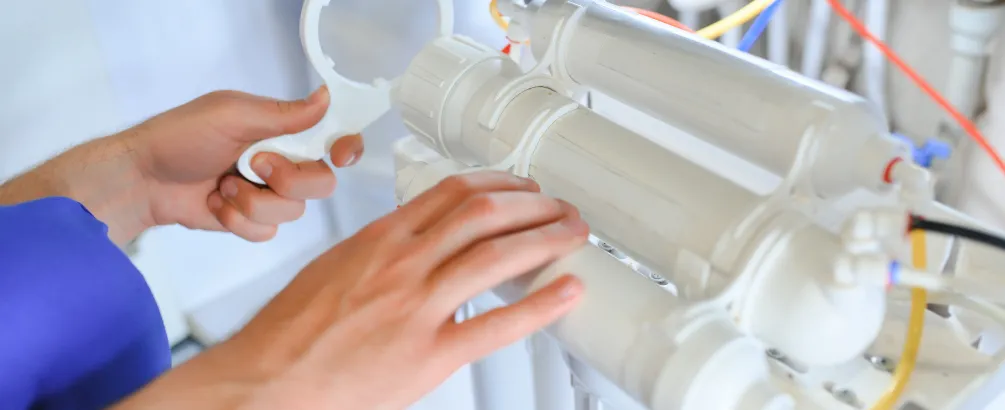
Activated carbon filters work well for improving taste and reducing certain odors. Water softeners help address hardness caused by calcium and magnesium. Oxidation systems target sulfur and iron, while reverse osmosis systems remove many dissolved contaminants that affect drinking water quality.
Some homes benefit from whole-house treatment, protecting every faucet throughout the property. Others only require point-of-use filtration beneath the kitchen sink for drinking and cooking water.
The right choice depends on the water itself rather than marketing claims or product popularity.
Don’t Ignore Small Changes
One of the biggest mistakes homeowners make is assuming water quality will simply improve on its own.
Sometimes temporary conditions resolve naturally. Other times, unusual taste or odor gradually becomes worse as mineral buildup increases or plumbing components age.
If your family suddenly begins avoiding tap water because something feels “off,” that’s usually reason enough to investigate further. Water should inspire confidence, not hesitation.
Routine testing every year or two—particularly for private well owners—helps identify small problems before they become expensive repairs or major water quality concerns.
Fresh Water Makes Everyday Life Better
Clean water quietly supports almost every part of daily life. It affects coffee, tea, cooking, showers, laundry, ice cubes, and even the lifespan of household appliances. When water tastes fresh and smells clean, most people never think twice about it.
That’s exactly how it should be.
If your water has recently changed, don’t settle for simply tolerating it. A professional evaluation combined with the right treatment solution can restore both water quality and peace of mind.
After all, something as simple as filling a glass of water shouldn’t come with uncertainty. When your water tastes clean, smells fresh, and performs the way it should, every day feels just a little easier—and that’s something every home deserves.