Water is one of those everyday things that quietly shapes how comfortable a home feels. We use it in the shower first thing in the morning, fill pots for dinner, make coffee, wash clothes, brush our teeth, and fill glasses throughout the day. When the water quality isn’t quite right, you notice it—sometimes immediately, sometimes only after months of dealing with the little signs.
Cloudy glasses, mineral spots, strange odors, dry-feeling skin, or buildup around fixtures can all make homeowners wonder what’s happening. The good news is that many common water-quality concerns have practical solutions. The first step is simply understanding your water.
Start With What Your Water Is Telling You
Before buying treatment equipment, take a closer look at the signs around your home. White scale on faucets may suggest hardness. Orange staining can point toward iron. An unpleasant odor may have another cause entirely.
A water test can provide much more useful information than guessing from appearances. Depending on the water source and the concerns involved, testing may examine hardness, pH, iron, sulfur, sediment, dissolved solids, and other characteristics.
This matters because treatment isn’t one-size-fits-all. The system that works beautifully for one house might be unnecessary—or ineffective—for another.
Why Residential Water Treatment Is Worth Considering
For many homeowners, residential water treatment is less about chasing “perfect” water and more about making everyday water more pleasant and practical.
Treatment can be designed around specific concerns. A softener may address hardness. Filtration can target sediment or taste and odor issues. Reverse osmosis may be useful for drinking water, while specialized systems can be selected when testing reveals a particular contaminant.
The important part is matching the technology to the problem. More equipment doesn’t automatically mean better water.
Sometimes, a simpler system is actually the smarter choice.
Hard Water Can Be a Quiet Household Nuisance
Hard water is common in many areas and contains minerals such as calcium and magnesium. These minerals aren’t necessarily something homeowners notice in a glass of water, but they can leave a trail of evidence around the house.
Think about the white film on a shower door, spots on freshly washed dishes, or the crust that slowly develops inside a kettle. Those are classic examples of mineral buildup.
Over time, hard water can also contribute to scale inside plumbing and water-using appliances. Water heaters, dishwashers, washing machines, and fixtures may all be affected.
A properly selected water softener can reduce hardness minerals and help minimize these everyday problems.
Better Water Can Make Daily Routines Easier
Improving water quality isn’t always about solving a dramatic problem. Sometimes the benefit is simply making ordinary tasks less annoying.
When water is properly treated, homeowners may notice fewer mineral deposits, improved taste, easier cleaning, or better-feeling water during showers. Those little improvements add up.
If you’re looking for better water for your home, start by identifying what “better” actually means to you. Maybe it’s better-tasting drinking water. Maybe you want to protect appliances from scale. Or perhaps the main concern is an unpleasant smell.
Your priorities should help shape the treatment plan.
Don’t Forget the Drinking Water
Whole-home treatment and drinking-water treatment aren’t always the same thing. Some homeowners want to improve the water entering every fixture, while others primarily care about water used for drinking and cooking.
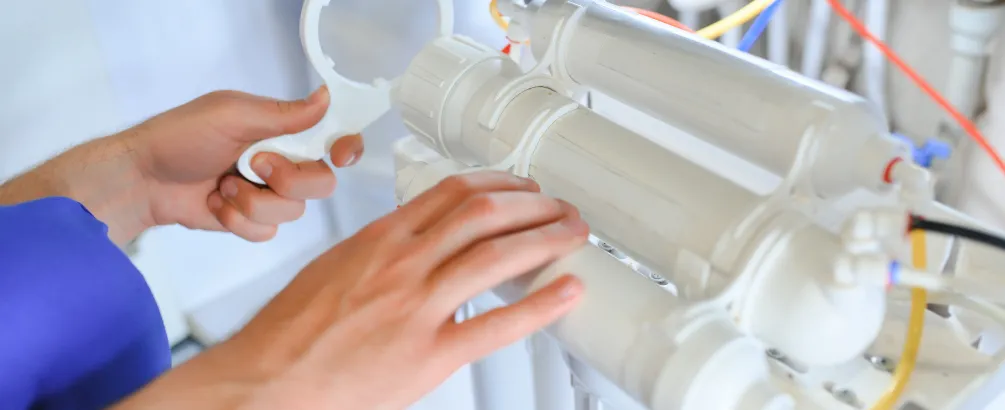
A point-of-use reverse osmosis system, for example, can provide an additional level of treatment at a kitchen faucet. Carbon filtration may also be useful for improving taste and odor, depending on the water.
Again, testing helps. It’s much easier to choose appropriate equipment when you know what you’re actually trying to reduce.
Water Quality Can Affect Appliances, Too
Appliances don’t complain when water quality isn’t ideal. They just slowly accumulate deposits, lose efficiency, or require more maintenance.
Hard-water scale can build up inside water heaters and other equipment. Sediment can interfere with components. Certain water conditions may also create staining or corrosion concerns.
Protecting appliances is one reason water treatment can be viewed as a long-term home investment rather than just a drinking-water upgrade.
Nobody enjoys replacing an appliance earlier than expected, especially when the problem could have been reduced with better water management.
Maintenance Is Part of the Solution
Once a treatment system is installed, it needs some attention. Filters need replacing, softeners may need salt or servicing, and other equipment can have specific maintenance schedules.
It’s tempting to forget about a system once it’s working. Out of sight, out of mind, right?
But regular maintenance helps keep performance consistent. Homeowners should understand replacement intervals and operating costs before purchasing equipment. A system that looks inexpensive initially may cost more over time if its maintenance requirements are high.
A little planning goes a long way.
Choosing the Right Professional
If you’re unsure where to begin, working with an experienced water-treatment professional can simplify the process. Look for someone willing to test and explain your water rather than immediately recommending a product.
A good professional should be able to explain what the test results mean, why a particular treatment is being suggested, how much maintenance it requires, and what the long-term costs might look like.
You don’t need a complicated sales pitch. You need useful information.
Small Changes Can Have a Big Impact
Water treatment isn’t about making your home unnecessarily complicated. It’s about solving specific water-quality concerns in a practical way.
If you want to improve your home’s water quality, begin with testing and observation. Look at the signs around your house, understand the source of your water, and choose treatment based on evidence rather than assumptions.
The best system is usually the one that quietly does its job without becoming another household headache. Better-tasting water, cleaner fixtures, protected appliances, and easier daily routines may not sound revolutionary—and that’s kind of the point.
When water works well, you don’t have to think about it much. You simply turn on the tap and get on with your day.