There was a time when school meant one thing—uniforms, morning assemblies, chalk dust, and that familiar bell that somehow controlled your entire day. Then came the pandemic, and everything shifted overnight. Classrooms moved into living rooms. Teachers became faces on screens. And students… well, they adapted faster than most of us expected.
Now that things have settled—at least a little—the question isn’t whether online learning works or not. It’s something more layered. More real. Can we blend the best of both worlds and make it sustainable?
### The Comfort of Physical Classrooms Still Matters
Let’s not pretend online classes replaced schools entirely. They didn’t. There’s something about being physically present that’s hard to replicate.
The casual conversations between classes, the energy of a group discussion, even the discipline of sitting in a classroom—it all adds up. For younger kids especially, school isn’t just about academics. It’s social development, emotional learning, routine.
Parents noticed it. Teachers did too. Students, even the ones who enjoyed online flexibility, eventually missed that human connection.
### But Online Learning Changed Expectations
At the same time, something interesting happened. Once students got used to online learning, they didn’t want to give it up completely.
Recorded lectures, the ability to pause and replay, access to resources anytime—it’s powerful. A student struggling with a concept doesn’t have to feel left behind anymore. They can revisit the lesson at their own pace.
That’s where platforms like entity[“mobile_app”,”BYJU’S”,”Indian edtech platform”] and entity[“mobile_app”,”Unacademy”,”Indian learning platform”] found their rhythm. They didn’t replace schools, but they complemented them.
And that complement is what’s shaping the future.
### The Idea of “Hybrid” Feels Natural—At Least on Paper
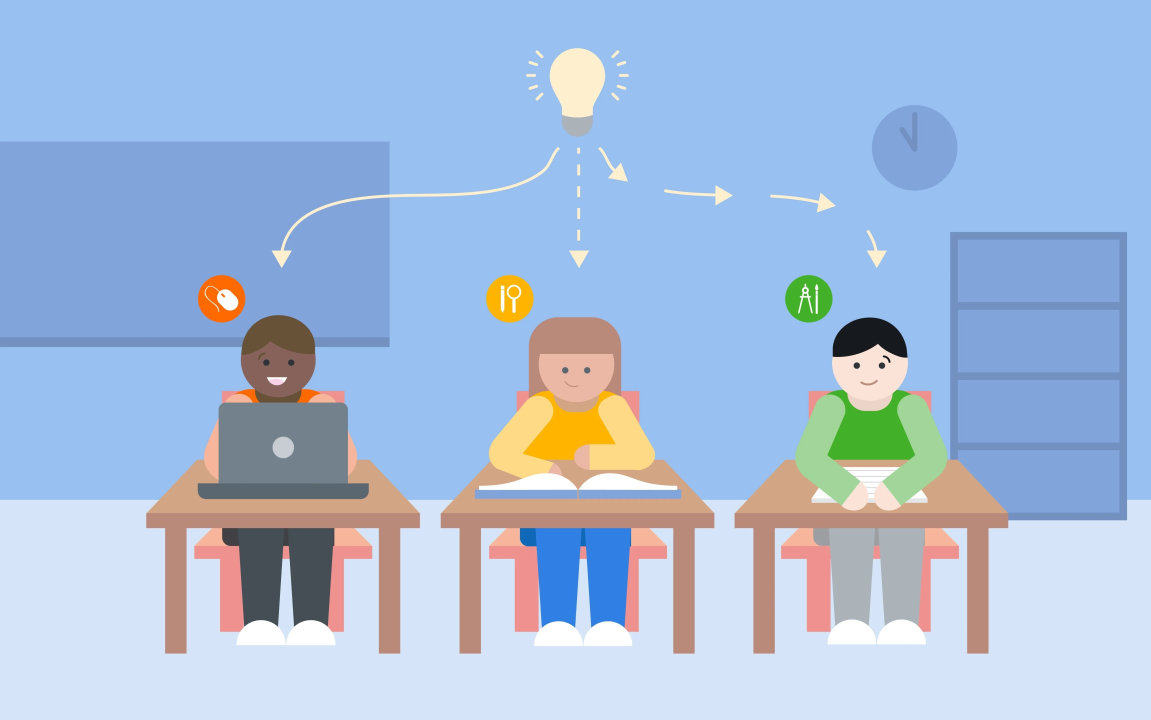
If you think about it, hybrid schooling sounds like the perfect middle ground. A few days in school, a few days learning online. Or maybe classroom teaching supported by digital modules.
It feels balanced. Flexible. Efficient.
But reality is always a bit messier.
Schools need infrastructure, teachers need training, and students need guidance to manage both formats effectively. Without that, hybrid can easily become chaotic instead of helpful.
### Different Realities Across India
One thing that can’t be ignored is how diverse India is.
In metro cities, hybrid schooling feels more achievable. Internet access is relatively stable, devices are more common, and schools often have the resources to experiment.
In smaller towns and rural areas, the picture is different. Connectivity issues, limited access to devices, and even electricity can become barriers. For many students, online learning still isn’t a reliable option.
So when we talk about hybrid schooling, it’s not a one-size-fits-all solution. It has to adapt to context.
### Teachers Are Still Figuring It Out
If students had to adjust, teachers had to reinvent themselves.
Teaching online isn’t just about turning on a camera and speaking. It’s a different skill. Engagement works differently. Attention spans behave differently. Even feedback feels different.
Many teachers have done an incredible job adapting, but it’s been a learning curve. And hybrid models demand even more flexibility—switching between offline and online modes without losing effectiveness.
That’s not easy. Not even close.
### The Question Everyone Is Quietly Asking
At some point, this conversation always circles back to the same thought. Not loudly, but it’s there in the background.
**Hybrid schooling (online + offline) India me long-term solution ban sakta hai kya?**
It’s not a simple yes or no.
For some schools, it already feels like the future. For others, it still feels like a work in progress. And maybe that’s okay. Not every solution needs to be universal to be valuable.
### The Role of Parents Has Shifted Too
One subtle change that often goes unnoticed—parents are more involved now.
During online classes, they got a closer look at how their children learn, where they struggle, what engages them. That awareness hasn’t completely gone away.
In a hybrid setup, parents often become silent partners in the process—helping manage schedules, ensuring discipline during online sessions, sometimes even stepping in when things get confusing.
It’s a shared responsibility now, more than ever.
### Where Do We Go From Here?
If you strip away the noise, hybrid schooling isn’t about replacing classrooms or glorifying online learning. It’s about flexibility.
It’s about recognizing that learning doesn’t have to be confined to one format. That different students learn differently. That sometimes, the same student needs different approaches at different times.
Will it become the standard across India? Maybe not everywhere. Not immediately.
But will it continue to grow, evolve, and find its place? That feels far more likely.
### A Quiet Shift, Not a Loud Revolution
The future of education in India probably won’t come with a dramatic announcement or a single defining moment. It’ll look more like this—small adjustments, gradual changes, experiments that work in some places and fail in others.
Hybrid schooling is part of that journey.
Not perfect. Not final. But promising in a way that feels… real.
And maybe that’s enough for now.