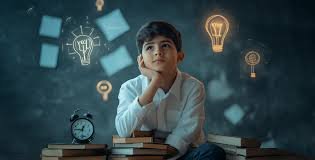
There’s a familiar scene in many Indian homes—books spread across the table, a half-finished cup of chai going cold, and a student staring at a question that just won’t make sense. Maybe it’s trigonometry, maybe it’s organic chemistry, maybe it’s just one of those “why is this even in the syllabus?” moments.
Not long ago, the options were limited. Call a friend, wait for the next tuition class, or just… move on and hope it doesn’t show up in the exam.
Now? Things feel different. There’s a new kind of help available—quiet, instant, and oddly patient.
Learning Doesn’t Stop at the Classroom Door Anymore
Education in India has always been intense. Competitive exams, packed syllabi, and the constant pressure to perform—it’s a system that pushes students hard.
But it also leaves gaps. Not every doubt gets solved in class. Not every student learns at the same pace. And not everyone can afford personal tutoring.
This is where AI-powered tools have started to slip into the picture—not dramatically, but steadily. Platforms like BYJU’S and Khan Academy began the shift toward digital learning, but now AI is taking it a step further.
It’s not just about watching videos anymore. It’s about interaction.
The Question That’s Changing Conversations
As more students begin using these tools regularly, a deeper question is starting to surface: AI tutors Indian students ke learning pattern ko kaise change kar rahe hain?
And honestly, the answer isn’t as straightforward as “they make learning easier.” It’s more layered than that.
Because what’s really changing isn’t just access to information—it’s the way students approach learning itself.
Doubts Get Solved Instantly (And That Changes Behavior)
Think about this: when a student knows they can get an answer within seconds, they’re more likely to ask the question in the first place.
That’s a subtle but important shift.
Earlier, doubts would pile up. One unclear concept would quietly affect the next, and before you knew it, the entire chapter felt shaky. Now, with AI tutors available 24/7, that gap is shrinking.
Students aren’t waiting anymore. They’re exploring more, sometimes even going beyond the syllabus just because they can.
Learning at Your Own Pace—Finally
Classrooms, by design, move at a fixed speed. Some students keep up easily, others struggle silently.
AI tutors don’t have that limitation.
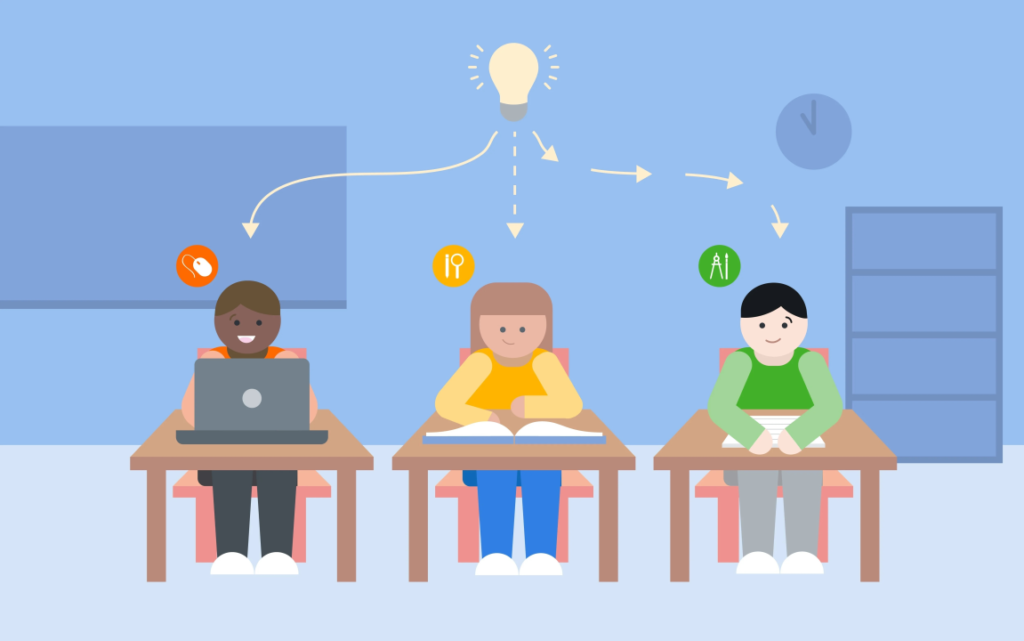
If you need to revisit a concept five times, no problem. If you want a simpler explanation, it adjusts. If you’re ready to move ahead faster, it doesn’t hold you back.
This kind of flexibility is rare in traditional setups. And for many students, it’s a relief.
It’s Not Just About Answers—It’s About How You Get Them
One interesting thing about AI tutors is that they don’t always just give you the final answer. Many of them break problems down step by step, almost like a patient teacher sitting beside you.
For subjects like math and science, this matters a lot.
It encourages understanding over memorization. Or at least, it tries to.
Of course, there’s always the temptation to skip straight to the answer. That hasn’t gone anywhere. But the option to learn properly is now more accessible than before.
The Quiet Rise of Self-Learning
Something subtle is happening here. Students are becoming a bit more independent.
They’re not relying entirely on teachers or coaching centers anymore. They’re experimenting, testing themselves, and sometimes even correcting their own mistakes using AI tools.
It’s not a complete shift—coaching culture in India is still very strong—but there’s definitely a parallel system emerging.
A quieter one.
Not Everything Is Perfect (And That’s Worth Noting)
Let’s not paint this as a flawless revolution.
AI tutors can sometimes give incorrect or oversimplified answers. They don’t always understand context the way a human teacher does. And they can’t fully replace the emotional support or mentorship that good teachers provide.
There’s also the issue of over-reliance. If students start depending too much on instant solutions, it might affect their problem-solving patience.
So yes, there are trade-offs.
Accessibility Is Expanding—But Not Equally
One of the biggest advantages of AI tutors is reach. A student in a small town can access the same quality of explanations as someone in a metro city.
That’s powerful.
But it’s not universal yet. Internet access, device availability, and digital literacy still create gaps. So while the technology is promising, its impact isn’t evenly distributed.
At least, not yet.
The Bigger Picture
What’s really interesting is that AI tutors aren’t loudly disrupting the system. They’re quietly weaving themselves into it.
A student might attend school, go to coaching, and still use AI tools late at night for revision. It’s not replacing anything outright—it’s adding another layer.
And maybe that’s why the change feels so natural.
Where Do We Go From Here?
It’s hard to say exactly where this will lead. Maybe AI tutors will become more advanced, more personalized, almost like having a dedicated teacher for every student.
Or maybe they’ll remain just one part of a larger learning ecosystem.
Either way, something has shifted.
That late-night moment—the one where a student is stuck, unsure, and a little frustrated—it doesn’t feel as lonely anymore. And sometimes, that small change makes all the difference.