Kyoto has around sixteen hundred Buddhist temples and four hundred Shinto shrines, and a visitor on a three-day trip will manage perhaps eight without starting to resent them. The mistake is doing the famous ones consecutively. Travellers who find Kyoto flight deals on Traveloka should pick by type rather than by ranking, because the temples here differ enormously in what they are for.
The big three, and the cost of them
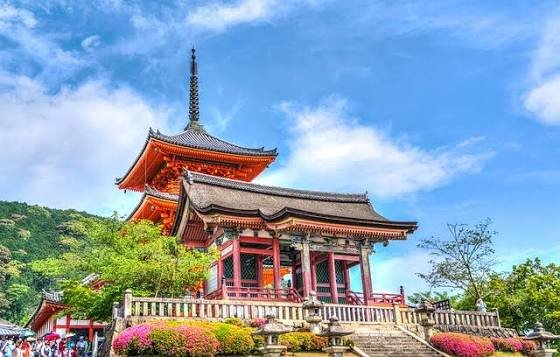
Kinkaku-ji’s golden pavilion, Kiyomizu-dera’s hillside stage and Fushimi Inari’s gate tunnels are the three everyone sees, and all three are extremely crowded from mid-morning. Each is genuinely worth it at opening or in the last hour. Doing all three in one day is possible and will be the least enjoyable day of the trip.
Zen gardens: Ryoan-ji and Daitoku-ji
Ryoan-ji’s fifteen rocks in raked gravel is the most famous dry garden in the world and is viewed from a crowded veranda. Daitoku-ji, a walled complex of sub-temples a short distance away, has four or five gardens of comparable quality with almost nobody in them. If you want to sit and look at a garden, go to the second.
Working monasteries
Tofuku-ji and Myoshin-ji are large active Zen complexes in the south and west respectively, where monks train and most of the grounds are free to walk through. They feel institutional rather than scenic, which is the point. Tofuku-ji’s bridge is spectacular in late November and solid with people for exactly that fortnight.
The esoteric and the strange
Sanjusangen-do holds a thousand and one gilded Kannon statues in a single long hall, with twenty-eight guardian figures in front of them, and the effect is unlike anything else in Japan. To-ji’s five-storey pagoda is the tallest wooden tower in the country. Both are indoor, uncrowded and open in bad weather.
The ones that need advance booking
Saiho-ji requires a written application weeks ahead and a sutra-copying session before you see the moss garden, which keeps numbers to a trickle. Katsura Imperial Villa and Shugaku-in are free but need an online reservation. These are the quietest significant sites in Kyoto and the barrier is paperwork rather than money.
Shrines are not temples
Shinto shrines, marked by torii gates and guardian foxes or lions, serve a different religion and a different purpose from Buddhist temples. Fushimi Inari is a shrine; so is Yasaka in Gion. Knowing which you are entering changes what you look at, and the etiquette differs: bow and clap at a shrine, bow quietly at a temple.
Practical notes
Most temples open at nine and close between four and five, which is the real constraint on the day. Many charge a few hundred yen. Buses are slow in season; bicycles are the fastest way around central Kyoto. Traveloka offers the lowest flight prices in the region for the regional connections into Osaka.
Take two famous sites at opening, spend the middle of the day somewhere indoor and uncrowded, and book Saiho-ji weeks ahead if you want the garden without a queue.